Coatings1Coatings2Coatings3Coatings4Coatings5Coatings6Coatings7Coatings8

Chem Film/Iridite/Chromate Conversion Coating per MIL-DTL-5541 is a chemical process that produces a protective chromate conversion film on aluminum and aluminum alloys. Coatings
range from clear to dark yellow. The darker coatings provide the greatest corrosion protection. The coating can be used as a final finish and can also serve as a base for paints and high performance top coats, lacquers, or a base for rubber bonding. By chemically reacting with the metal being treated, the Chem Film solution forms a thin (.00002 max.) gel-like complex chromate film over the entire surface of the part. The film is integral with the metal itself and thus cannot flake, chip or peel. Being non-porous and resistant to moisture damage, the Chem Film protects the underlying metal from corrosion.

Phosphate coating per MIL-DTL16232G, TT-C-490E is a crystalline conversion coating that is formed on a ferrous metal substrate. The phosphating process relies on the basic pickling reaction that occurs on the metal substrate when the process solution comes in contact with the metal. This coating is employed for the purpose of pretreatment prior to painting, increasing corrosion protection, and improving friction properties of sliding components. In other instances phosphate coating is applied to threaded parts and top coated with oil to add anti-galling and rust inhibiting characteristics.

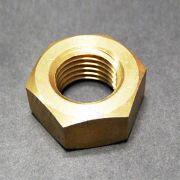
Copper & Brass Bright Dippingis a two step immersion process used to clean and remove oil and dirt residue and surface corrosion or tarnishing from solid brass parts. The process is often used as a pretreatment to painting or followed by a clear coat in order to prevent future tarnishing. The copper and brass parts must first be thoroughly cleaned to remove all surface oils and grime that are present. Any oil present will cause the bright dipping process to be uneven. The second step of the process involves a very strong acid dip to remove the corrosion and brighten the brass. The timing of this step is critical as too little will result in an uneven finish and too much will result in removal of too much metal from the parts. A tarnish inhibitor is applied which will provide short-term protection until your next operation.

Xylan Coating is a family of fluoropolymer coatings designed for use on various types of OEM components and fasteners. Most Xylan coatings contain PTFE or other types of lubricants and are applied in thin films. Xylan Coating provides lubrication and controlled friction, wear resistance, heat resistance, nonstick and release properties and, at the same time, can also protect from corrosion

PTFE (polytetrafluoro ethylene) nonstick coatings are two-coat (primer/topcoat) systems. These products have the highest operating temperature of any fluoropolymer, extremely low coefficient of friction, good abrasion resistance, and good chemical resistance. PTFE coatings can withstand a maximum use temperature of 600F. This coating is typically applied to a thickness of 1-3 mils.

DACROMET is a zinc-rich dip-spin coating. It is a way of applying a sacrificial coating of zinc that offers greater corrosion resistance than zinc electroplating and inorganic coating specified by automotive companies worldwide and is a proven coating system in many industries. A water-based, VOC compliant coating, DACROMET is comprised mainly of overlapping zinc and aluminum flake in an inorganic binder.

Coatings1Coatings2Coatings3Coatings4Coatings5Coatings6Coatings7Coatings8